
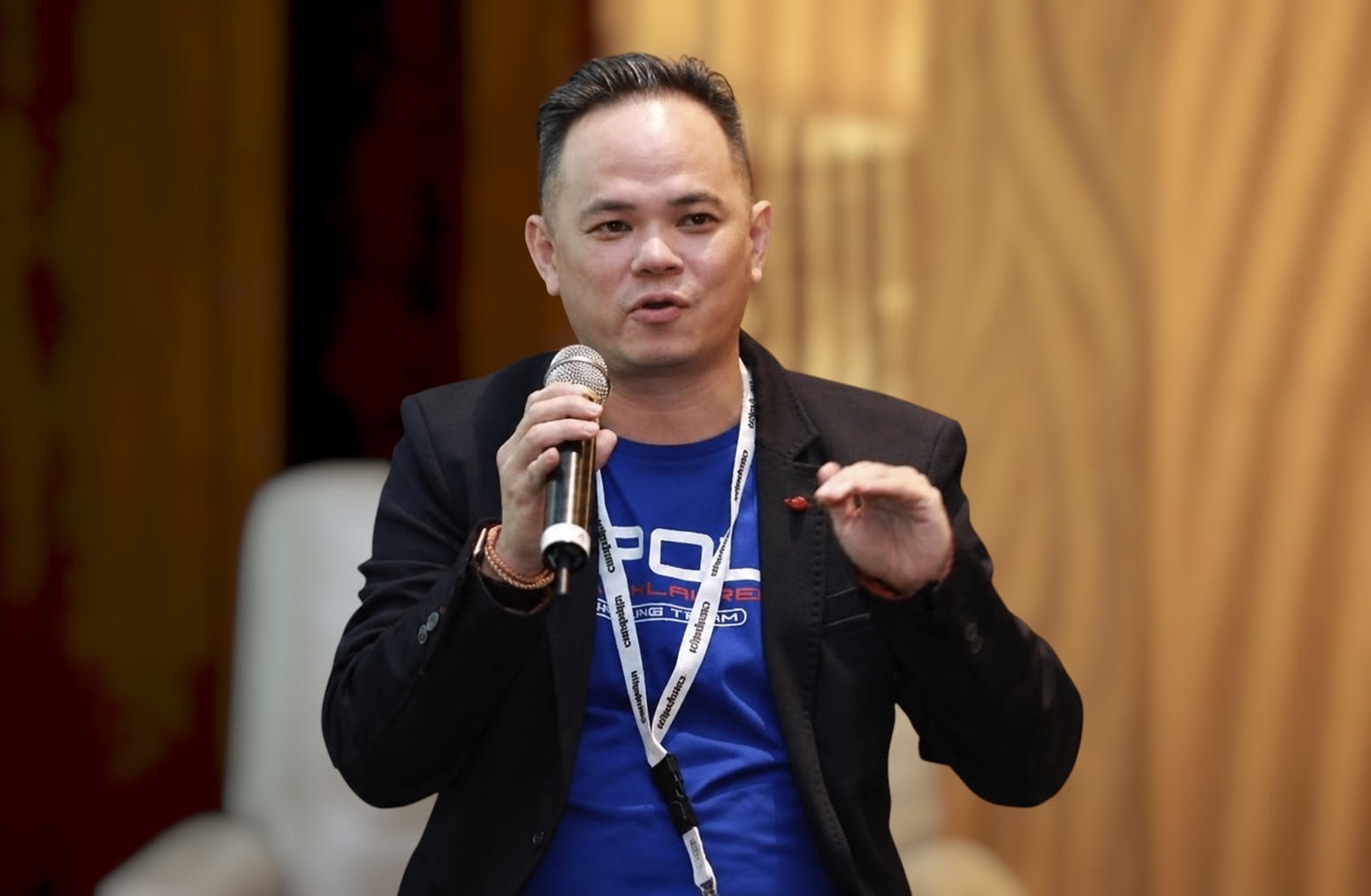
Alvin Foo has witnessed nearly every major technology cycle of the past three decades — from the dot-com boom and mobile revolution to social media, cloud computing, blockchain, Web3 and crypto. But the seasoned business and technology leader believes AI represents a more fundamental shift, as it changes the economics of knowledge work itself.
“For the first time, software isn’t just storing information or processing transactions; it can perform parts of thinking,” he says, adding that AI therefore has the potential to give every knowledge worker a team of digital assistants. He also points to the unprecedentedly rapid pace of adoption: “AI capabilities are improving every few months, and the cost continues to fall while quality rises.”
Yet Foo argues that adopting the latest models is not what separates the winners from the rest. “The companies seeing the biggest returns aren’t necessarily using the most advanced models,” he says. “They’re the ones that redesign how work gets done.”
That distinction is particularly important for technical teams. While AI accelerates coding, testing, documentation and prototyping, it cannot replace the judgment required to design secure, reliable systems that meet business needs. According to Foo, the strongest developers are therefore spending less time writing code and more time defining problems, making architectural decisions and validating AI-generated work.
“For years, being a great developer largely meant writing efficient code,” he reflects. “Today, coding is becoming the easy part.”
He also warns that greater productivity should not be treated as an invitation to cut engineering teams prematurely. “Some organizations see impressive AI demos and assume they can dramatically reduce engineering teams overnight,” he says. Instead, “the companies getting the best results aren’t replacing their strongest engineers; they’re making them significantly more productive.”
Foo brings a broad perspective to AI implementation. Trained as a lawyer, he later served as Head of Mobile for Greater China at Google and held senior roles at other global technology companies, including Nokia. Over the past decades, he has helped build and scale businesses across fintech, advertising technology, blockchain and Web3 throughout Asia. Today, he advises founders and leadership teams on how to apply AI strategically and redesign their organizations for an AI-first world.
In this conversation with TechTalents Insights, Foo discusses how AI is reshaping developers’ work, which skills will matter most, and why human judgment and accountability remain indispensable.
TechTalents Insights: You describe clients coming to you at the ‘we need to do something with AI’ stage. What’s a common misconception a founder has when they first come to you?
Alvin Foo: One of the biggest misconceptions is that AI is a product you buy rather than a capability you build.
Many founders come in asking, “Which AI tool should we use?” That’s actually the wrong first question. The better question is, “Where is work getting stuck?”
Another misconception is that AI replaces people. In reality, the biggest gains come from augmenting your best people.
We’ve seen teams double or triple productivity not because they hired fewer employees, but because they removed repetitive work that consumed hours every day.
The companies seeing the biggest returns aren’t necessarily using the most advanced models. They’re the ones that redesign how work gets done.
TechTalents Insights: After 25 years scaling start-ups in Asia and multiple hype cycles, what’s different this time with AI?
Alvin Foo: I’ve lived through the dot-com boom, mobile, social media, cloud, blockchain, Web3 and crypto.
Most technology waves improved distribution or created new markets. AI is different because it changes the economics of knowledge work itself.
For the first time, software isn’t just storing information or processing transactions; it can perform parts of thinking. It can research, write, summarize, analyze, reason across large amounts of information, and generate working software.
What’s also unique is the speed of adoption. Previous technology waves took years before businesses felt the impact. AI capabilities are improving every few months, and the cost continues to fall while quality rises.
This isn’t simply another software upgrade. It’s closer to giving every knowledge worker a team of digital assistants. Companies that learn how to orchestrate these assistants will have a structural advantage over those that don’t.

TechTalents Insights: In the automation projects you’ve run, which specific developer or technical tasks have you actually seen replaced or heavily compressed by AI?
Alvin Foo: AI hasn’t replaced developers in the projects I’ve worked on, but it has dramatically compressed many engineering tasks.
Tasks like writing code, generating APIs, creating unit tests, documentation, SQL queries, debugging straightforward issues, data transformation, and code migration are now significantly faster.
We’ve also seen AI accelerate prototyping. Features that previously took several days can sometimes be built into working prototypes within hours.
Where AI still struggles is in understanding business context, making architectural trade-offs, handling edge cases, ensuring security and compliance, and integrating complex enterprise systems.
So the role isn’t disappearing; it’s shifting. Developers spend less time typing code and more time deciding what should be built and validating that AI-generated code is production-ready.
TechTalents Insights: For the developers and tech professionals on these teams, how has their day-to-day actually changed? What are they spending time on now that they weren’t a year or two ago?
Alvin Foo: The biggest shift is that developers are spending more time thinking and less time typing.
Instead of writing every line manually, they’re reviewing AI-generated code, validating outputs, designing better system architectures, and integrating multiple AI services together.
Many are also becoming AI workflow designers, building agentic systems where multiple AI models collaborate on different tasks.
Another noticeable change is the amount of experimentation. Teams iterate much faster because generating prototypes is almost instantaneous.
The bottleneck has moved away from writing code and toward defining the problem correctly, validating results, and ensuring quality.
TechTalents Insights: What new skills should a developer master?
Alvin Foo: For years, being a great developer largely meant writing efficient code. Today, coding is becoming the easy part.
The most valuable developers understand systems thinking. They know architecture, security, data design, APIs, governance, and how businesses actually operate.
AI is making coding more accessible, but it’s also increasing the value of judgment.
Developers should master AI-assisted development, prompt engineering, agent orchestration, model evaluation, cloud architecture, and cybersecurity. Just as importantly, they need strong communication skills because translating business problems into AI-enabled solutions is becoming a competitive advantage.
The future belongs to developers who can combine technical depth with business understanding.
TechTalents Insights: Is there a risk that companies cut technical roles too early based on AI promises, then have to backfill? Have you seen that happen?
Alvin Foo: Some organizations see impressive AI demos and assume they can dramatically reduce engineering teams overnight.
In reality, AI still requires experienced people to review outputs, maintain systems, manage security, ensure compliance, and handle production issues.
The companies getting the best results aren’t replacing their strongest engineers; they’re making them significantly more productive.
I believe we’re entering a phase where companies need fewer people doing repetitive implementation work, but greater demand for experienced engineers who can design reliable systems and govern AI responsibly.
The smarter strategy is to measure productivity gains first before making structural workforce decisions.

TechTalents Insights: You trained as a lawyer and worked at Google before this. What made you take the step into becoming an AI advisor?
Alvin Foo: Looking back, every stage of my career prepared me for this.
My legal training taught me structured thinking, risk assessment, and how to break down complex problems.
Google taught me how technology scales globally and how innovation transforms industries.
Over the last two decades, I’ve helped build and scale businesses across fintech, advertising technology, blockchain, and Web3 throughout Asia.
When AI reached an inflection point, I realized the challenge wasn’t the technology; it was helping businesses understand how to apply it strategically.
Today, my work sits at the intersection of business strategy, technology, and execution. I spend less time talking about AI models and more time helping leadership teams redesign how their organizations operate in an AI-first world.
TechTalents Insights: For compliance and HR use cases specifically, where do you draw the line on what should stay human-reviewed? Are your clients thinking about this proactively?
Alvin Foo: I believe AI should support high-impact decisions, not make them independently.
In HR, AI is excellent at screening CVs, summarizing interviews, drafting job descriptions and identifying patterns. But hiring, promotions and performance decisions should always involve human judgment.
The same applies to compliance. AI can review policies, detect anomalies, monitor regulatory changes and prepare reports far faster than humans. But decisions involving legal interpretation, regulatory obligations or disciplinary action should remain under human oversight.
The most mature organizations are already thinking about governance. They’re asking questions like, “Who is accountable for AI decisions?” “How do we audit outputs?” “How do we protect sensitive data?”
As AI becomes embedded into business processes, governance won’t be optional; it will become a competitive advantage. The companies that combine AI speed with human accountability will earn the greatest trust from employees, customers, and regulators.
About Alvin Foo
Alvin Foo helps tech founders and executives cut through the AI hype and ship production-ready AI automation that saves hundreds of hours and unlocks new revenue streams — often in less than 30 days.
To connect with Alvin, send him a direct message on LinkedIn including the words “AI AUDIT” or “30-DAY SPRINT”.
Want to stay informed with content that matters?
Join 30,000+ HR professionals and tech leaders: subscribe to the TechTalents Insights newsletter and get our best articles and interviews, completely free.