

Maybe you have found yourself in a situation where you have two candidates in the final round of interviews — you clearly prefer one over the other, but you’re unable to articulate exactly why. In such a situation, should you trust your instincts? Can gut feelings be rational?
On one hand, plenty of experienced hiring managers will tell you that some of their best hires came down to an intuition they couldn’t fully explain on paper. On the other hand, that same instinct is exactly the argument used to justify decisions that, on closer inspection, had more to do with who reminded the interviewer of themselves than with who could actually excel in the role. The two situations can feel identical from the inside — which is precisely the problem.
Before we address this question — whether a legitimate gut feeling can exist in hiring — we need to explore how our brains function. This will help you tell the difference between a legitimate gut feeling and bias.
Thinking, Fast and Slow
“Humans are to thinking what cats are to swimming. We can do it if we have to, but we much prefer not to.”
–Daniel Kahneman (1934–2024), Nobel Prize in Economics
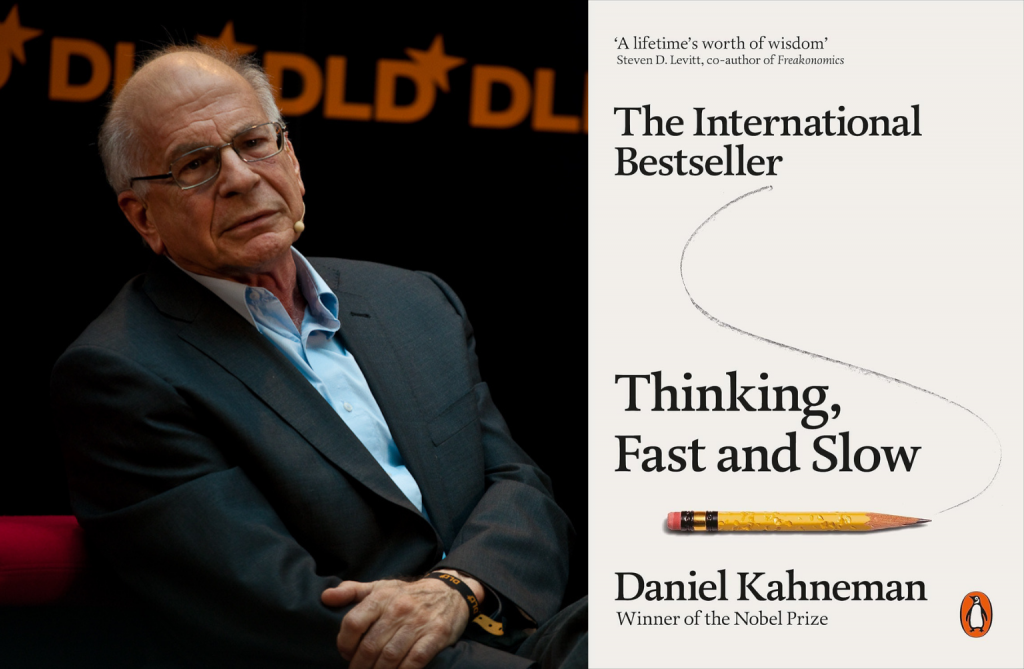
Daniel Kahneman was an Israeli-American psychologist who, building on the work of Keith Stanovich and Richard F. West, popularized the concept of two distinct thinking modes, System 1 and System 2. Kahneman’s book Thinking, Fast and Slow (2011), a bestseller, explains the division. (Importantly, unlike the brain’s hemispheres, System 1 and System 2 are not anatomical structures; they are just metaphors.)
System 1 is fast, unconscious, and costs no energy. It runs on automatic. It forms first impressions, reacts to danger, and performs routines.
System 2 is slow and analytical. It is thinking, properly said — like what we do before making a move in chess or when we have to calculate 24 x 378. However, activating System 2 costs energy, so we avoid using it. Not because we are inherently lazy, but because we have to make thousands of decisions every day — some sources estimate the number at 35,000. If we had to rely on System 2 for each one of those decisions, we would be exhausted before even having breakfast.
It is estimated that about 96% of our thinking runs through System 1, and 4% through System 2, meaning we still leave around 1,400 decisions each day for System 2 — assuming the often-cited figure of 35,000 daily decisions holds true.
Fun fact: Steve Jobs famously wore the same minimalist outfit — black mock turtlenecks by Issey Miyake, Levi’s blue jeans, and New Balance sneakers — every day to avoid decision fatigue and save his mental energy for critical business decisions

System 1 is therefore a survival mechanism that allows us to navigate the world with shortcuts — Kahneman calls these shortcuts heuristics. System 1 has a downside, though: the potential for cognitive biases.
Cognitive biases are the problems that can sometimes arise from taking these shortcuts. They can be defined as unconscious, systematic errors in thinking that occur when people process and interpret information in their surroundings, influencing their decisions and judgments. (For a helpful explanation of the difference between heuristics and biases, watch this video.)

Cognitive biases in recruitment
Between 2001 and 2002, researchers Marianne Bertrand and Sendhil Mullainathan sent 5,000 resumes to 1,300 real job postings in Boston and Chicago. The only difference between the resumes was the name at the top: each CV was assigned either a very African-American-sounding name or a very White-sounding name. The result: “Greg” and “Emily” got 50% more callbacks than “Jamal” and “Lakisha”.
It’s possible that many of the recruiters who dismissed Jamals and Lakishas believed they were being objective. Bias does not necessarily arise because the recruiter or hiring manager is ill-intentioned, but rather due to time constraints and the need for quick decisions. As a result, professionals often rely on System 1, which is fast. However, without strategies in place to mitigate bias, this approach can lead to inefficiencies in the hiring process.
Below are some of the most harmful cognitive biases in recruitment:
- the halo effect and its opposite, the horn effect
- the confirmation bias
- the affinity bias
- the bandwagon effect
- the anchoring bias
- the availability bias, and
- the framing effect.
Together, these biases make hiring decisions significantly less efficient than they could be.
Let’s explore what each of these biases means — and how to fix them.
The halo effect and the horn effect
The halo effect is the tendency to form an overall favorable judgment of a person (or company, country, brand, or product) based on a single positive trait. In other words, a strength in one area can influence how we evaluate that individual in other areas — be it competence, character, or potential.
The term comes from American psychologist Edward Thorndike (1874–1949), who described the phenomenon with empirical evidence in 1920. Thorndike discovered that when an officer rated a soldier highly on physical appearance, he also gave him higher scores on intellect, leadership skills, and other qualities.
In job interviews, the halo effect happens when the interviewer quickly forms a positive impression of the candidate based on a single aspect — and it can be something as minor as a confident handshake. This first impression then influences how the interviewer perceives every subsequent answer, for example, by interpreting a vague response as modest, and therefore passable. In contrast, if the same vague answer were given by an unhaloed candidate, they would be regarded as unprepared.
The opposite of the halo effect is the horn effect: in a job interview, that’s when a negative first impression (e.g., due to a minor stutter or even poor body language such as a lack of eye contact) leads the interviewer to view all of the candidate’s subsequent answers negatively, regardless of their actual qualifications.
How to address the halo effect and the horn effect
A blinded CV screening often helps mitigate both the halo and the horn effects — removing the candidate’s name, gender, university, and previous employer names from CVs before assessment.
Additionally, scoring candidates against predefined competencies can help prevent a positive (or negative) impression of one aspect from contaminating the others. The overall impression is only formed after aggregating the individual scores, not before.
Confirmation bias
Daniel Kahneman defined the confirmation bias as follows: “Very quickly you form an impression, and then you spend most of your time confirming it instead of collecting evidence.”
Cognitive biases are often interconnected. Confirmation bias is closely related to the halo effect and the horn effect: once a recruiter or hiring manager has an initial impression of a candidate — whether good or bad — they may start hunting for evidence to confirm it.
In unstructured job interviews, confirmation bias leads interviewers to ask questions that confirm their first impressions. For a haloed candidate, the follow-up questions are meant to make them shine, reinforcing the initial impression. For an unhaloed candidate, the questions tend to be more skeptical. The first impression becomes a self-fulfilling prophecy.
How to address the confirmation bias
Use structured interviews. Candidates should be asked the same questions in the same order, and interviewers should score them independently for each question.
Another possibility is to add two mandatory questions to every candidate review: “What would a skeptic say about this candidate?” and “What would a strong advocate say about this candidate?” Together, these questions force assessors to actively look for evidence that contradicts their initial feeling — countering the halo effect in one direction and the horn effect in the other.
Affinity bias
Affinity bias is the tendency to rate candidates more favorably when they share similarities with us (or with someone we like) in terms of background, education, personality, hobbies, or communication style. This bias is often misinterpreted as a gut feeling.
The effect often compounds: the more homogeneous the existing team is, the stronger the inclination to favor candidates with the existing profile. Sometimes, culture fit may be just compounded affinity bias.
How to address the affinity bias
Structured interviews and blind CV screening can help against affinity bias. Diverse interview panels also reduce the risk of any single assessor’s personal affinity driving the outcome.
The bandwagon effect
The bandwagon effect is the tendency to adopt other people’s beliefs or behaviors not because you think others are right, but because dissenting becomes uncomfortable.
In recruitment, it manifests in group debriefs, when early voices set the direction for everyone who speaks afterward.
For example, consider a group discussing which candidate to hire after the final interviews. If the first person to speak — especially if someone with high status — strongly advocates for hiring a candidate, their opinion may serve as an anchor, influencing everyone’s perception. As a result, someone with valid concerns about the same candidate may hesitate to voice their thoughts — suppose that this hypothetical candidate comes from a top university and has worked for prestigious companies, but arrived late to the interview and gave clear signs of not being excited about the opportunity. The group converges not necessarily on the best decision, but on the path of least resistance.
How to address the bandwagon effect
An effective way to address the bandwagon effect is to have panel members independently score candidates on a predefined scale for each competency before any group discussion. This method also helps mitigate the halo effect.
Anchoring bias
The anchoring bias refers to the tendency to give disproportionate weight to the first piece of information we get. In recruitment, the anchoring bias can influence salary decisions, even when the anchor is incorrect.
For example, a woman who has been undervalued in her previous role may receive a new offer that is still below market rate. Maybe it was not the hiring manager’s intention, but the anchor effect influenced this outcome.
How to address the anchoring bias
The new EU Pay Transparency Directive prohibits employers from asking candidates about previous and current compensation. The goal is to prevent the anchoring bias from perpetuating the gender pay gap.
The availability bias
When we make decisions or assess risks and opportunities, we often rely on the most immediate examples that come to our minds. We tend to believe that if something can be easily recalled or leaves an impression, then it must be important, or at least more important than alternatives that are not as readily remembered.
The classic example: news of a plane crash stands out more than reports of all the other flights that went on uneventfully. Our brain may assess the risk of flying based on the most vivid information, that is, the plane crash.
In recruitment, the availability bias occurs when recruiters make decisions based on the information that comes to their minds most easily. For example, the most recent candidate you interviewed may have an edge simply because their responses are fresher in your memory.
Another trick the availability bias plays: how we react to dazzling interviews. We tend to remember the candidates who wowed us, and because those memories are so easy to recall, we may overestimate how well interview performance predicts job success (more on this topic later on).
The availability bias can also lead to flawed logical conclusions, and here it gets very connected to the affinity bias. If your most successful team members all come from a specific background, you might mistakenly assume that this background is the reason for their success. This assumption may be more about what is easily recalled than the actual cause of their achievements. As a result, candidates from different backgrounds may have to work harder to demonstrate that they are a good fit.
How to address the availability bias
Use independent scoring immediately after each interview, before impressions have time to blur or compound. Once you’ve interviewed everyone, evaluate them side by side rather than one after another.
Structured interviews also reduce the room for a dazzling personality to carry the whole evaluation. And depending on the situation, you can ask candidates to complete a task that mirrors the actual job — and evaluate whether the one who performs best in the interview also performs best on the task.
According to research, the best predictor of how someone will perform in a job is a work sample test, which can explain 29% of the variation in hired employees’ actual performance, followed by general cognitive ability tests and structured interviews (both at 26%). The most common hiring tool — the unstructured interview — is less predictive (14%), and reference checks are just better than a coin flip (7%).
In a 2013 interview with The New York Times, Laszlo Bock, then senior vice president of people operations at Google, revealed: “Years ago, we did a study to determine whether anyone at Google is particularly good at hiring. We looked at tens of thousands of interviews, and everyone who had done the interviews and what they scored the candidate, and how that person ultimately performed in their job. We found zero relationship. It’s a complete random mess, except for one guy who was highly predictive because he only interviewed people for a very specialized area, where he happened to be the world’s leading expert.”
The framing effect
The framing effect is the tendency to evaluate the same information differently (and make different decisions) depending on how it is presented.
Unlike the previous biases, which influence recruiters and hiring managers, the framing effect operates in candidates’ brains.
Job ads can trigger the framing effect, depending on how they frame the requirements. If a job listing includes ten must-have qualifications, it may disproportionately exclude candidates whose personalities are more rule-following.
Similarly, research has shown that job adverts written in stereotypically masculine-coded language (‘aggressive,’ ‘dominant’) attract fewer female applicants, even when the role itself is equally suitable for both. Women reading the ad unconsciously feel that the profile is not meant for them — even when they rationally know they could do the job.
How to address the framing effect
Instead of listing a dozen must-have competencies, opt for a job ad that specifies only a few core competencies and treats the rest as learnable. Use gender-neutral terms like “they/them” and avoid language that may inadvertently discourage women and non-binary candidates from applying. If you’re unsure about your phrasing, tools like Gender Decoder can help identify gender bias in job ads.

Why awareness doesn’t prevent bias
TechTalents Insights asked Jesper Bedinger, a licensed psychologist and Senior Consultant at the business psychology consulting firm Summit, how far awareness training actually gets organizations in reducing bias.
His answer: “To be radically honest: it gets them almost nowhere. It is an illusion of progress. Knowing about a cognitive bias does not make you immune to it; even when we know about biases, we still get influenced by them. When executives or recruiters are under severe time pressure and cognitive load, which they always are, the brain will inevitably take the lazy shortcut, regardless of how many awareness seminars they’ve attended.”
“Awareness training often just results in making the same biased decisions, but perhaps feeling slightly more guilty about them,” he says. “If you want to change hiring outcomes, you don’t need to change people’s awareness; you need to change the architecture of the decision. You need hard psychometric data and rigid, structured interviews that prevent the interviewer from relying on intuition.”
In fact, awareness of bias can even backfire, as research shows: telling people that stereotyping is widespread, in the hope of motivating them to consciously resist it, not only didn’t work but actually led them to express more stereotypes themselves. The core takeaway: framing stereotyping as a common, normative behavior can inadvertently license more of it. We should consider that a more effective way to address the problem is to avoid emphasizing its prevalence and instead highlight active efforts to counteract it.
Why behavioral design works better than awareness
We are all wired to behave in ways that do not align with a perfect rational model, even when we are trained to recognize behavioral biases.
A book by behavioral economist Iris Bohnet, What Works: Gender Equality by Design, showcases several ways to use behavioral design to address our lack of rationality — and promote gender equality in society and organizations. As she puts it, “There is no design-free world. Organizations have to decide how to search for and select future employees. How they advertise open positions, where they post the job openings, how they evaluate applicants, how they create a short list, how they interview candidates, and how they make their final selections are all part of choice architecture. Why not design a bit more thoughtfully, increasing the chances that the best people are hired?”
The fixes highlighted earlier in this article have more to do with changing processes — creating triggers for System 2 to take over. These solutions, however, can still face obstacles within organizations. “This fear of trying new things and failing is a real constraint,” Bohnet writes, recognizing that “in some organizations, acknowledging past errors is risky. Thus, while the CEO or the president might be enthusiastic about discovering mistakes and piloting a new idea, managers at all levels might well feel threatened.” She recommends that corporations create safe spaces for experimentation where mistakes are taken as an opportunity to learn.
In the book, Bohnet also presents plentiful evidence of the economic benefits of overcoming gender bias. However, she emphasizes that the economic gains should not be the primary motivation for reducing bias; otherwise, these efforts may be abandoned at the first sign of hardship: “While the macro- and the micro-evidence hold the promise of a business case, gender equality is not a magic bullet automatically leading to economic progress. This is why, at the end of the day, the case of gender equality must rest on a moral argument. It just is the right thing to do. Full stop.”
Importantly, she highlights that leading employers are continually refining their hiring processes, using data insights to identify which procedures and decisions actually lead to successful hires. As the saying goes, what does not get measured cannot be fixed.
“Replacing intuition, informal networks, and traditional rules of thumb with quantifiable data and rigorous analysis is a first step toward overcoming gender bias,” writes Bohnet. “Successful for-profit and not-for-profit organizations such as Credit Suisse, Goldman Sachs, Google, LinkedIn, Microsoft, and Teach for America increasingly run their HR departments like they run their finance or marketing departments, based on evidence. Some now refer to them as ‘people analytics departments.’”
Criticism of unconscious bias
Behavioral design addresses biases in hiring as a matter of a process wrongly designed around System 1, not as a matter of bad intentions. It tends to get buy-in where other approaches hit resistance — individuals are typically more willing to cooperate when they don’t feel accused of something. As we’ve seen, behavioral design focuses on creating processes that force individuals to use System 2.
As cognitive bias research gained mainstream traction, so did the idea that “most bias is unconscious” or that unconscious bias is the main problem driving inequality in hiring — but such claims have real critics. Some say that the emphasis on unconscious bias risks avoiding real conversation about racism and systemic behavior. Joy Warmington, CEO of the equalities charity brap, wrote that what gets labeled unconscious sits alongside active forms of exclusion.
What to do when the bias is conscious?
Sometimes, bias is conscious, and when it is, we are no longer dealing with a cognitive issue that can be solved by behavioral design. “You are dealing with an integrity issue,” Bedinger states. “Behavioral design and System 2 processes won’t fix this, because a consciously biased manager will simply manipulate the structured process to get the outcome they want. They will reverse-engineer to justify their preferred candidate.”
He explains that the solution for conscious bias is different: “You address it through strict compliance, transparency, and the removal of unilateral power. You require hiring decisions to be made by a diverse panel, you audit the manager’s historical hiring data, and you use third-party psychometric assessments, like Hogan, as a hard, objective gatekeeper. If a manager consistently ignores objective data to hire based on their personal preferences, that is not a cognitive quirk. It is a leadership failure, and it must be managed as a serious performance issue or risk.”
So, should you trust your gut feeling or not?
As we’ve seen at the beginning of this article, not all heuristics lead to bias.
Bedinger explains that intuition built on experience and pattern recognition is real — and valid in many professions and situations. However, he argues that the nature of hiring makes it less likely to develop this type of intuition: “Expert intuition is a real psychological phenomenon, but it only develops in ‘high-validity environments,’ places with predictable rules and immediate, objective feedback. A firefighter can have a reliable gut feeling that a floor is about to collapse. A chess master can instinctively see a winning move. But executive recruitment is a ‘low-validity environment.’ You interview someone for 60 minutes, and you don’t see the actual result of your decision until they face a crisis 18 months later. You simply do not get the immediate feedback required to train your gut feeling.”
“Therefore, what an executive calls ‘intuition’ during an interview is rarely expert pattern recognition; it is just a biological response to how comfortable the candidate makes them feel in the room,” he says. “In recruitment, your gut is a terrible predictive instrument. We measure to know, and we trust the data.”
So, perhaps the better question to ask is: is your gut feeling sufficient? And the answer is no.
Nevertheless, just because intuition alone is not sufficient does not mean it should be dismissed. Kahneman’s empirical research found that intuition does add value to hiring decisions, “but only after a disciplined collection of objective information and disciplined scoring of separate traits.” If you rely on intuition first, you’ll risk falling into confirmation bias — wasting time seeking evidence that supports your first impression. His advice: “do not simply trust intuitive judgment — your own or that of others — but do not dismiss it either.”
The case for structured rigor in hiring has its limitations, as it may require time and resources that many organizations lack, especially when competing for in-demand IT talent. In an ideal world, you might have a developer work on a real task for a week before deciding; in real life, hiring decisions almost always have to be made under time pressure, with whatever signal is available.
Plus, in hiring, experience matters. Some authors advocate for the wise use of intuition, particularly if you are an expert, such as executive coach Jessica Pryce-Jones. She shares the story of Dr. Matthews Mtumbuka, a senior telco executive, who described a hiring round for quality assurance engineers where four candidates had already been ranked using a structured methodology, and he was expected to choose from the top two. But during the interview with the fourth-ranked candidate, his gut told him she was the strongest of the group. Instead of overriding the ranking outright, he told her directly that she hadn’t been recommended — and asked her to prove his instinct was right. She pointed him to a reference, he called on the spot, and the recommendation was strong enough to change the outcome. They hired her, and according to Mtumbuka, she went on to uncover a major problem with a fuel cartel that was hurting the business. His own conclusion: mixing analytical and intuitive methods tends to produce the best results.
Pryce-Jones says that “If you’re an expert like Dr Matthews Mtumbuka, you can identify the things that will make someone good at their job even if it’s hard to articulate exactly what they are.”
A founder who has made more than 100 hiring decisions has likely picked up some real pattern recognition along the way, and discarding that intuition entirely would be a mistake. For those with less hiring experience, however, the risk of mistaking bias for gut feeling is higher.
Put simply, your gut may be right. It may also be pattern-matching against candidates who look, sound, or think like you. So, whenever time and resources allow, build the structure — and the next time you find yourself deciding between two finalists, treat your gut as one of the available signals about the preferred candidate, not a decision worth making on its own.
Want to stay informed with content that matters?
Join 30,000+ HR professionals and tech leaders: subscribe to the TechTalents Insights newsletter and get our best articles and interviews, completely free.