

The 2026 Winter Olympics are underway, putting teamwork and preparation in the global spotlight. For those building tech teams, the Winter Olympians are an inspiration. If we pay enough attention, we will find valuable lessons about leadership, learning curves, or performing with limited resources.
After all, even in individual sports, success at this elite level is never achieved alone. Behind every medal is a high-performing team — coaches and support staff included — working in sync under high pressure.
One of the most remarkable Olympic stories comes not from Milano Cortina 2026, but from Calgary 1988. It is the unlikely journey of a team from the Tropics that entered the Winter Olympics with no tradition, no experience, and scarce resources. The story was brought to the screen by Disney in 1993, with the sports comedy Cool Runnings, now definitely a Winter Olympics classic.
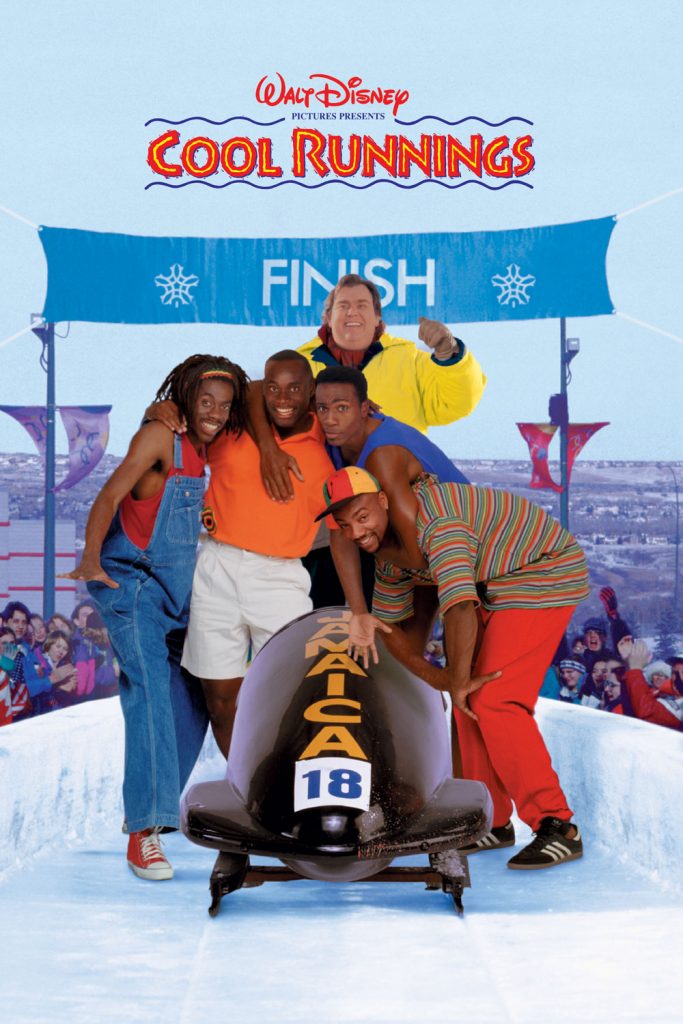
Cool Runnings tells the story of a Jamaican bobsled team competing in the 1988 Winter Olympics in Calgary, Canada, and is loosely based on real events. In the movie, we follow four Jamaican athletes: Derice, Yul Brenner, Junior, and Sanka. Except for Sanka, they are sprinters whose dreams of competing in the Summer Olympics are crushed by an accident during the qualifiers — Junior stumbles and accidentally trips both Derice and Yul Brenner. Despite this setback, they refuse to give up on their ambitions and realize that achieving them will require versatility and the courage to adapt to an entirely new sport: bobsled.
This inspiring movie offers tech teams 9 valuable lessons, which we will explore in this article.
1. Different personalities complement each other
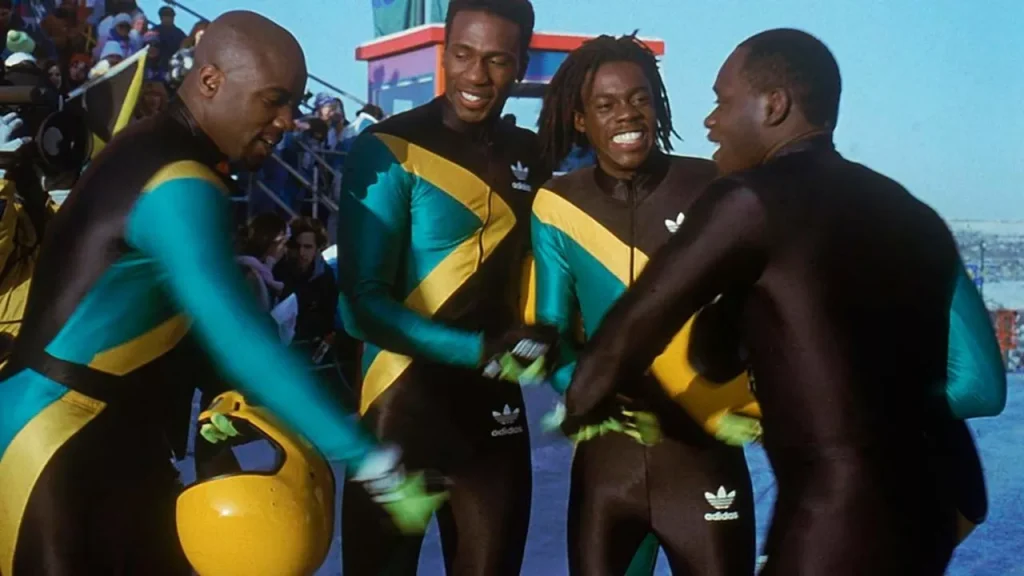
The four athletes are very different from one another. Derice, the son of a former Jamaican Olympic gold medalist, is the most determined to pursue the Olympic dream. Junior, the son of a wealthy, self-made man, struggles to find his own voice and confidence, but is loyal and willing to make sacrifices for the team. Yul Brenner, the grumpy one, sees the Olympics mainly as a gateway to the lifestyle he dreams of, and resents Junior for causing the accident that derailed their sprinting careers. Sanka is a laid-back pushcart derby champion who joins mostly for his camaraderie with Derice.
Despite some initial tension, the shared purpose brings the team together. Junior is the first in the team to validate Yul Brenner’s ambitions; in return, Yul helps Junior build his confidence.
Like the Jamaican bobsled team, tech teams thrive on complementary strengths. Derice is the driven technical leader who carries the vision forward. Junior represents the young professional still building confidence. Yul Brenner embodies the gifted but skeptical contributor whose motivation may not fully align with the team’s purpose. And Sanka is the culture carrier, embodying the Jamaican style at crucial moments.
2. Leadership is not only about experience
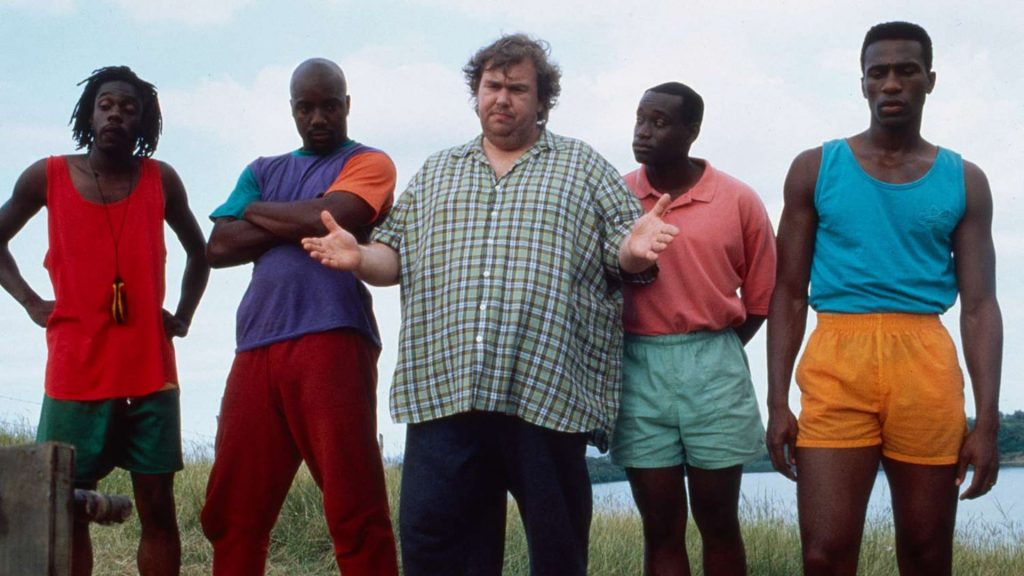
Early in the movie, Derice struggles to convince Irv, a two-time U.S. Olympic gold medalist living in Jamaica, to join the adventure and build the first-ever Jamaican bobsled team. Irv is initially reluctant, but ultimately agrees to be the coach. That’s how Irv quickly becomes familiar with Derice’s determination.
When the time comes to choose a pilot for the sled, Irv selects Derice over Sanka. Although Sanka has experience as a pilot, he lacks what it takes to lead the sled and carry responsibility for his teammates’ lives.
The coach delivers a speech that quickly convinces Sanka to abide by the decision and be the brakeman: “You see, Sanka, the driver has to work harder than anyone. He’s the first to show up, and the last to leave. When his teammates are all out drinking beer, he’s up in his room studying pictures of turns. You see, a driver must remain focused 100% at all times. Not only is he responsible for knowing every inch of every course he races, he’s also responsible for the lives of the other three people in the sled. Now, do you want that responsibility?”
Later in the movie, the coach’s intuition is confirmed when we see Derice alone in his room, diligently studying pictures of turns instead of joining his teammates for a night out.
For leaders, here’s a lesson: building strong tech teams requires distinguishing expertise or experience from actual leadership potential. Being a great developer doesn’t automatically make someone a great technical leader. It often takes a blend of accountability, determination, and the ability to earn trust — even when, like Derice, one is still learning the intricacies of his craft.

3. Fear no cringe — and work hard
The four Jamaicans were not afraid of seeming cringe. When they arrive at the Olympics, other teams look down on them because of their outdated sled, lack of tradition, and even lack of technique. Unbothered by the stares, the Jamaicans remain focused on doing the best they can with the resources they have.
It’s often the fear of looking ridiculous that deters many of us from progressing in our endeavors. The Jamaican team, however, embraced the fact that, well, everyone has to start somewhere. The front-runners came from colder countries and were familiar with ice from an early age. The Jamaicans, in turn, understood they were at a different stage in their journeys. Instead of feeling embarrassed by the gap, they acknowledged that stage as a vital one for their growth and future success.
Lacking skills in the present doesn’t mean a lack of potential. It often means one is in the process of learning and reaching full potential. The key is to focus on continuous improvement through hard work.
And the Jamaicans did work hard. Training begins in Jamaica, without any ice, where they first learn to push the sled to competitive speeds and jump into it in under six seconds. Once in Canada, they must learn from scratch how to run and balance on ice. Derice, as the pilot, faces the added challenge of mastering steering on ice. Practice, meaning lots of repetition along with some strength training, brings the progress they aim for.
This dynamic mirrors what often happens when building high-performing tech teams. New teams or engineers stepping into unfamiliar domains frequently feel out of place — especially when compared to seasoned competitors with years of experience, mature systems, and larger budgets. Like the Jamaican bobsled team, many tech teams are behind not because they lack talent, but because they are early in their journey. Such awareness is what teams often need to continue pursuing their goals.
4. Adaptability is the biggest competitive advantage
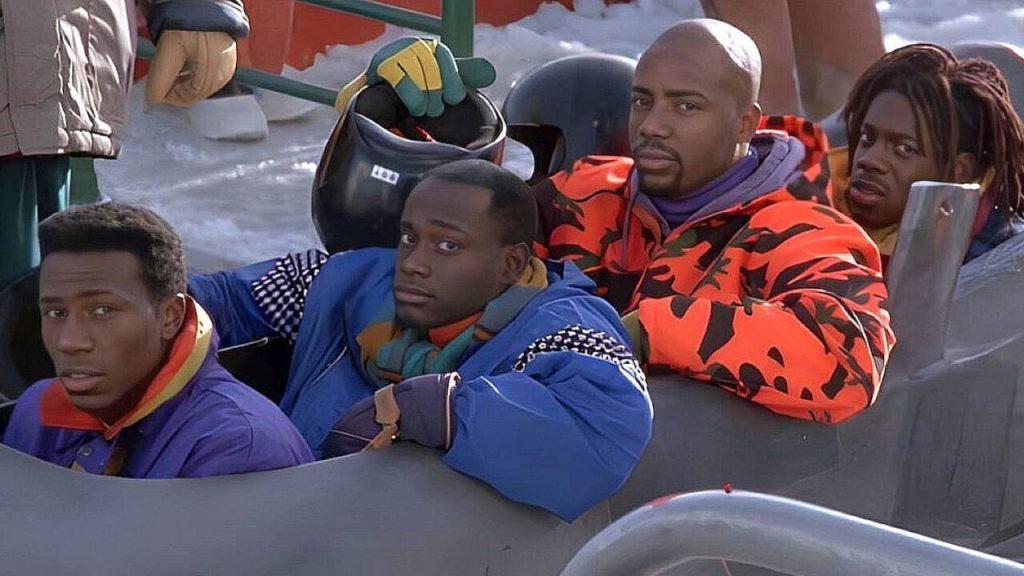
As we saw, the Jamaican bobsled team was born from a willingness to adapt. Derice was a sprinter who wanted to be an Olympian, like his father. When an incident prevents him from competing in the Summer Olympics — meaning he would have to wait a full four-year cycle to get another chance — he comes up with a new way to become an Olympian, adapting his skills as a track sprinter to push the sled.
In technology, adaptability is also a crucial soft skill — the one that keeps technical skills sharp. Frameworks change, tools evolve, and stacks become obsolete. High-performing teams are not defined so much by what they already know as by how quickly they learn, adapt, and improve together. What matters most is creating an environment where experimentation and learning are encouraged, and mistakes are treated as part of the process.
5. Be yourself — everyone else is already taken
Another key lesson of the film is the importance of staying true to oneself. In Calgary, Derice quickly becomes impressed by the Swiss — the inventors of bobsled — and begins copying their rigid, Germanic style, even counting “eins, zwei, drei” instead of “one, two, three.” This sudden shift unsettles his teammates, and on the first day of competition, their results are disastrous.
Sanka confronts Derice, reminding him that success depends on staying true to their style: “If we look Jamaican, walk Jamaican, talk Jamaican, and is Jamaican, then we sure as hell better bobsled Jamaican.” Once Derice understands this, the team regains its confidence. The next day, they arrive at the venue chanting happily, fully in their element once again — and deliver a strong performance.
Many tech teams fall into the same trap. They copy the processes, architecture, or rituals of successful companies without considering their own context. What works for a large, mature organization may be disastrous for a small, fast-moving team. High-performing teams develop practices that fit their size, culture, constraints, and goals, rather than just imitating others.

6. Always bring your best game
The Jamaican team was not the strongest in the competition, but they were fully committed, supported one another, and ended up surprising far more experienced teams.
Similarly, software development is about teamwork — more than many people realize. And when it comes to teams, an often unacknowledged truth is this: the best team doesn’t always win, but the team that plays best always does. Or, as Swedish handball coach Lars Hällkvist used to say: “Each day, a worse team beats a better one.” This holds true in both sports and tech.

7. Psychological safety enables growth
The movie also explores how to overcome past mistakes. Coach Irv carries a hidden shame: he once cheated. That’s why he’s treated as a has-been once they arrive in Calgary. Rather than letting that past mistake define him, he uses what he’s learned to guide the team. At a crucial moment in the movie, it becomes clear that he puts the team’s success over his pride.
When Derice finally takes the courage to ask the coach about the cheating incident that happened 20 years earlier, Irv explains that winning had become his entire identity. Despite his two gold medals, he felt worthless, and that lack of self-value pushed him to cheat.
High-performing tech teams depend on psychological safety, that is, the ability to admit mistakes without fear of punishment or shame. As a coach, Irv leads by example and shares his own vulnerability.
Irv’s redemption shows that trust is built not through perfection, but through honesty, accountability, and growth.
8. The only real competition is with yourself
When Derice discovers the reasons behind Irv’s cheating, he realizes that the real challenge is to feel enough regardless of the outcome. And that the only way to achieve this is to focus on making the most of the resources available — everything else is beyond our control.
As Irv sums it up perfectly, “A gold medal is a wonderful thing, but if you’re not enough without it, you’ll never be enough with it.”
The Jamaican team faces enormous disadvantages: they have an old sled acquired at the last minute through one of Irv’s former colleagues, little experience, and no familiarity with snow, ice, or cold weather. Yet they persevere, with dedication and teamwork, and each day they get better and better. The saying is true: one only has to compete against oneself. The movie leaves us with a feeling that, with a bit more time or better equipment, God only knows how far the Jamaicans could have gone.
In tech, as in sports, winning is often defined as beating competitors. Cool Runnings reminds us that sustainable success comes from mastering what we can control — such as learning, practicing, and working hard. By consistently doing our part, we may not achieve immediate wins, but we are laying the foundation for future success.
9. Momentum needs a beat
Finally, the film reminds us that everything feels a bit lighter with a great soundtrack. Whether you’re in sports or in tech, few recordings are more uplifting than “I Can See Clearly Now” by Jimmy Cliff. Additionally, tracks by Hans Zimmer and Jamaican legend Diana King also help create the perfect mood for achieving your goals.
Enjoyed the read?
Subscribe to the TechTalents Insights newsletter to start getting our best articles delivered to your inbox every other week.