
Every leader has been in this situation: the team misses its target, the review cycle arrives, and the question is how much weight the scoreboard should carry compared with each person’s individual contribution.
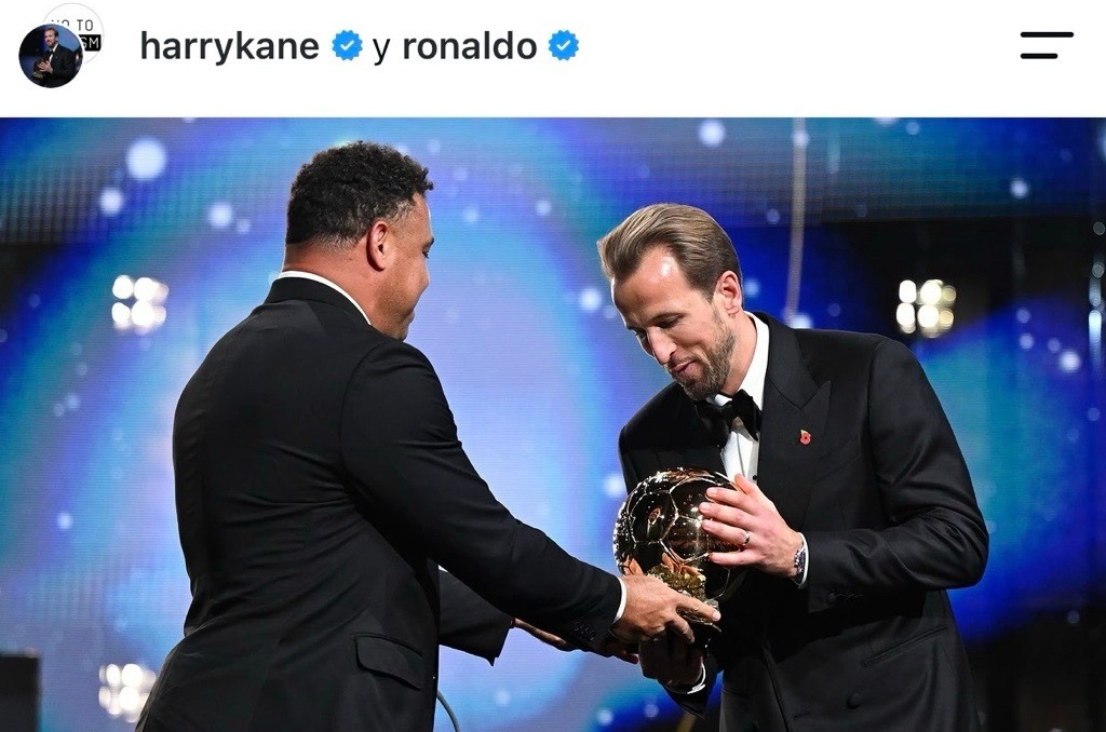
Football has just given a high-profile answer. Harry Kane won the 70th Ballon d’Or at a ceremony in London on October 26, after a season in which both his club, Bayern Munich, and his country, England, lost in the semifinals of their biggest competitions.
The 33-year-old striker still claimed football’s most prestigious individual award after scoring 73 goals for club and country.

What leaders can take from it
A leader should assess individual performance beyond the team’s results. After all, a team’s outcome often depends on factors no single person controls. A project can succeed because the market was already growing, or struggle because the market has stalled.
Plus, team results are rarely all bad, and Kane’s two teams show it. Bayern lost the Champions League semifinal to Paris Saint-Germain, but won three domestic trophies that season: the Bundesliga, the German Cup and the Franz Beckenbauer Supercup (also known as the German Super Cup).
England’s World Cup result was another case in point. Football didn’t “come home,” as the team lost the semifinal to Argentina. But as England’s captain, Kane still led his nation to a bronze medal. It was England’s best finish in sixty years, that is, since it won the tournament in 1966.
In the Ballon d’Or voting, he triumphed over Spain’s Lamine Yamal, a 2026 World Cup winner; France’s Kylian Mbappé, the tournament’s top scorer with 10 goals; and Ousmane Dembélé, who won the Champions League for the second season in a row with PSG.
Spain’s players had the World Cup and PSG players had the Champions League, but the Ballon d’Or voters valued Kane’s consistency and versatility (he can score in a variety of ways) and recognized his performance as the best a player had given that season.
Leaders face the same choice every review cycle: let the team’s result be the primary factor for everyone’s evaluation, or look closer.
Looking closer means separating what was under the employee’s control from what wasn’t. It means evaluating what the person decided, delivered, and improved, and how they helped the people around them.
Even after a disappointing quarter, a leader should still recognize individual brilliance out loud. If people learn that only the final score counts, a leader’s strongest performers on a struggling team may conclude their work is invisible, and some may go find a team that sees it. In corporate life, transfers are much simpler than in club football (and switching national teams is even more restricted).
None of this means results don’t matter. But a team’s result is one piece of information, and leaders who treat it as the only one risk losing their best people.
The pattern Kane defied
In nine of the ten Ballon d’Or editions preceding 2026 (2015-2025, with no award in 2020 due to the COVID-19 pandemic), the winner had won the Champions League title or a major international tournament with their national team: the World Cup, the Euros, or the Copa América. Cristiano Ronaldo in 2016 even had both: the Champions League and the Euros.
In six editions, the Ballon d’Or winner had also won the Champions League during the relevant award period: Lionel Messi in 2015 with FC Barcelona, Cristiano Ronaldo in 2016 and 2017 with Real Madrid, Luka Modrić in 2018 with Real Madrid, Karim Benzema in 2022 with Real Madrid, and Ousmane Dembélé in 2025 with PSG.
In four editions, the Ballon d’Or winner had also won a major international title with their national team during the relevant award period: Ronaldo in 2016 (the Euros, with Portugal), Messi in 2021 (the Copa América, with Argentina) and 2023 (the World Cup, won in December 2022), and Rodri in 2024 (the Euros, with Spain).
The sole exception in those ten editions was Messi in 2019: a win with no Champions League title or major international title with his national team. The voters rewarded the player, not the trophy count. They did it again with Kane. Leaders can do the same.
Subscribe to our newsletter
Join 30,000+ HR professionals and tech leaders: subscribe to the TechTalents Insights newsletter and get our best articles and interviews, completely free.