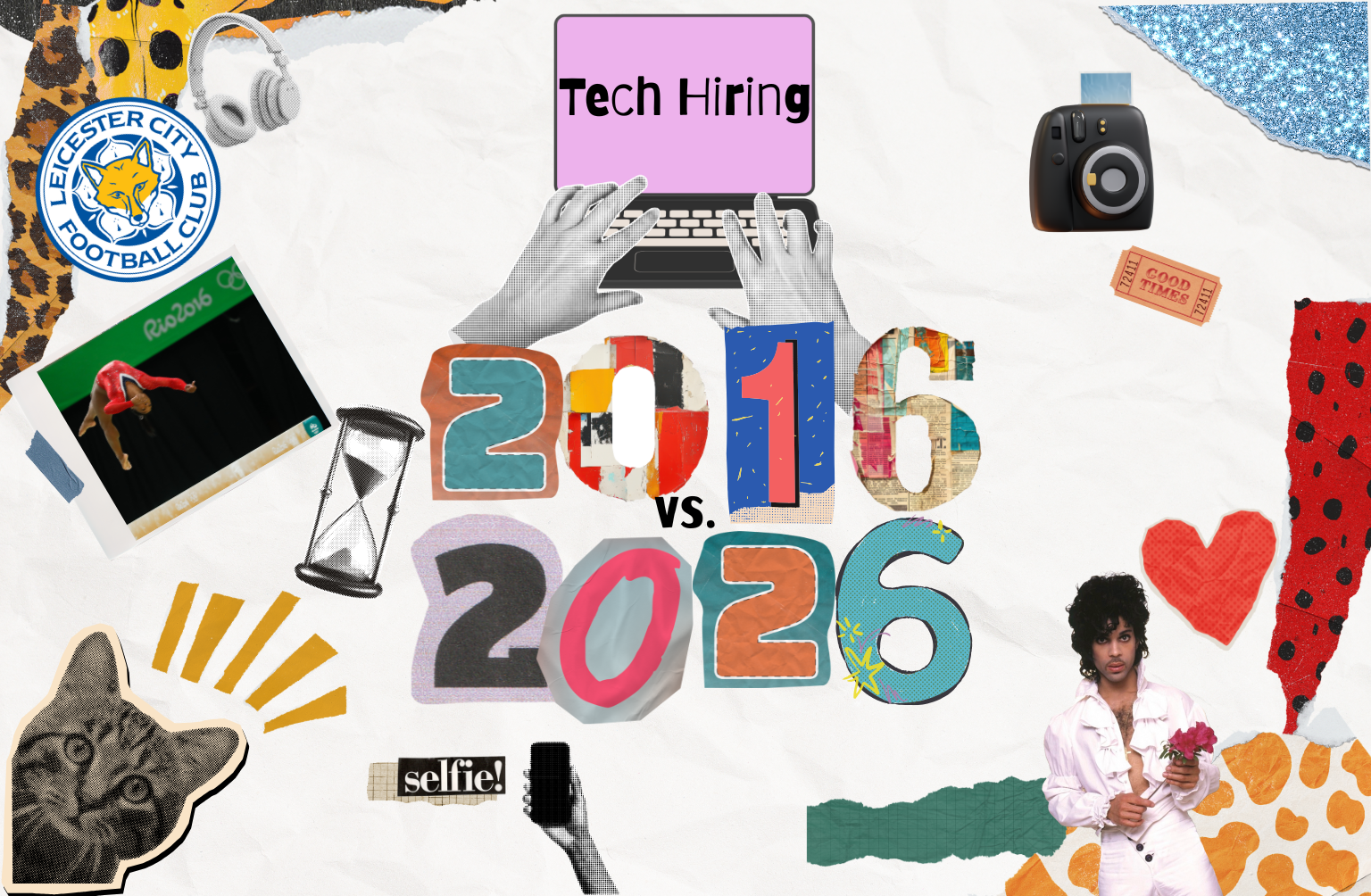
If you’ve spent any time on social media lately, you’ve probably noticed that 2016 is trending again — including “Lush Life” back on the pop music charts. People are reminiscing about supposedly simpler times, when we were younger, had fewer responsibilities, and lived the day as if it was the last.
2016 was also a time before COVID shook our lives, before uncertainty became the new normal, before every year came with its own plot twist.
The 2016 Summer Olympics in Rio were the coronation of a great year for sports, with records galore and Usain Bolt, Michael Phelps, and Simone Biles as its indisputable superstars. It was also the year Leicester City won its first (and, to date, only) Premier League title, and Portugal won Euro 2016 (its first and so far only European Championship).
In pop culture, people were keeping up with the Kardashians. In pop music, 2016 marked the release of Rihanna’s last album to date, Anti, as well as Beyoncé’s Lemonade. The year saw the farewell of beloved icons David Bowie, Prince, and George Michael.
2016 had its share of political tension and polarization, including the Brexit referendum and Donald Trump’s victory in the U.S. presidential election.
In tech hiring, 2016 really was a different era. Some practices that felt perfectly normal back then would fail in 2026. There were things that didn’t even exist back then. Let’s take a quick look back.
1. AI and automations sounded futuristic
2016:
Few companies were using an ATS back then. Recruiters screened CVs manually, and interviews were fully human-led. “AI tools” were vague buzzwords that sounded futuristic.
2026:
Ignoring AI, either as a skill or as a hiring tool, is not an option.
On the hiring side, AI supports sourcing, screening, and even job interviews. It also raises new challenges. Candidates want to know how AI is used in decision-making, and companies need to balance efficiency with transparency and fairness.
AI tools are also part of daily work for many tech professionals. Developers are expected to work with AI as a tool, from code generation to debugging and testing.
2. Hiring only locally made sense
2016:
Remote work was the exception, not the rule. Most companies hired within commuting distance, and relocation was still a totally realistic expectation.
2026:
Ever since COVID, remote and hybrid work have become the norm — even though the ghost of return-to-office (RTO) haunts employees from time to time, particularly in larger tech companies. Still, talent pools are now global, not local anymore, and employers in Europe are increasingly turning to cross-border hiring. In 2026, restricting hiring to a single city or country often means missing out on great candidates.
For small companies, this new scenario presents a valuable opportunity: by offering remote or flexible options, they gain a competitive edge over larger organizations in attracting top tech talent.
3. Freelancers? Only for one-off or short-term tasks
2016:
Tech freelancers already existed, but freelance work was usually regarded as only good for low-value tasks, often temporary.
2026:
Tech freelancers now handle long-term, high-value projects, working with the same clients for years.
Many top developers now prefer freelance or project-based work — and companies benefit from the flexibility. Hybrid teams combining freelancers and in-house employees are becoming increasingly common in the tech industry.

4. LinkedIn was not essential
2016:
LinkedIn was around, but it wasn’t the center of the hiring universe.
2026:
LinkedIn is unavoidable… and crowded. Passive posting rarely does the job anymore. Standing out requires strong messaging, costly advertising, and directly engaging with candidates.
5. Employer branding was not such a big deal
2016:
A job title, a salary range, a short company description, and voilà, your job posting was good to go.
Glassdoor was not a thing back then, so no employer needed to worry about bad employee or interviewee reviews hurting their reputation.
2026:
Developers want to know about the culture, values, tech stack, work model, and growth opportunities. A company’s reputation and employer brand are increasingly important factors in a candidate’s decision-making process. It’s now common for companies to have an HR person responsible for the employer brand, including social media, Glassdoor and similar employee review websites, as well as other channels.
Yes, employer branding has always existed internally, with a focus on existing employees. However, as more organizations began actively communicating their employer brand externally to attract new talent, staying silent became a disadvantage.
It’s a bit like home security: when all your neighbors have an alarm system, being the only house without one becomes a weakness.
6. JavaScript was not so dominant
2016:
JavaScript existed, but it wasn’t running everything.
2026:
Users don’t want to install software unless they absolutely have to. And as software moved to the cloud, the web became the natural interface. Modern apps are web-based, with interfaces far richer than in the past. That’s why JavaScript and its ever-growing family of frameworks now dominate front-end development. Keeping up with the stack is part of the job, for developers and recruiters alike.
7. Video interviews and meetings were rare
2016:
Remember when most interviews happened in person, at an office? The very few times video calls happened, they were usually on Skype.
2026:
Video interviews are the norm. Hiring across time zones, countries, and continents is routine. And Skype is just a memory.
8. GDPR was brand new and not yet enforceable
2016:
The General Data Protection Regulation (GDPR) was created in 2016. So, for many European companies, the new data protection law still felt distant and abstract during that year. Candidate data was stored liberally, CVs languished in inboxes for years, and very few organizations seriously considered consent or data retention.
2026:
Since becoming enforceable in 2018, GDPR has reshaped how companies handle personal data.
For hiring teams, this meant building transparent processes for storing, processing, and deleting personal information. Recruiters also need explicit consent from candidates to handle their data — and the purpose must be clear.
For candidates, GDPR brought greater control over their personal data.
In 2026, compliance is a core part of any professional hiring process. Companies that still treat candidate data casually risk not only fines but serious damage to their employer brand.
Wrapping up
Looking back, it’s easy to feel nostalgic about tech hiring in 2016. It felt simpler and more predictable. No one feared AI taking their jobs, no one had to worry about GDPR… Life was easy and carefree.
But when tech hiring evolved, it unlocked some great opportunities for both employers and employees. And it keeps evolving. So, enjoy the memories. Just don’t hire like it’s still 2016.
The collage used in this article includes a photograph of Simone Biles by Fernando Frazão (Agência Brasil), licensed under the Creative Commons Attribution 2.0 Generic license.
Time to subscribe!
Enjoying our content? Subscribe to the TechTalents Insights newsletter to start getting our best articles and interviews delivered to your inbox every other week.