

For job seekers, receiving a rejection letter is not a pleasant moment; the feeling is only slightly better than that of being ghosted by a recruiter or hiring manager.
Nevertheless, some companies have managed to turn their rejection letters into thoughtful gestures, enhancing the human side of the recruitment process and building lasting relationships. After all, a candidate who wasn’t the best fit for one role might be the ideal choice for your next job opening. Or maybe they will speak highly of you to their talented colleagues, who will eagerly apply to your open jobs.
On the other hand, a company will make one misstep with its rejection letters… and end up being exposed online, getting bad reviews, or even facing legal action.
In this article, we gather a couple of outstanding rejection letters for you to get inspiration from, along with some do’s and dont’s.
Red Bull
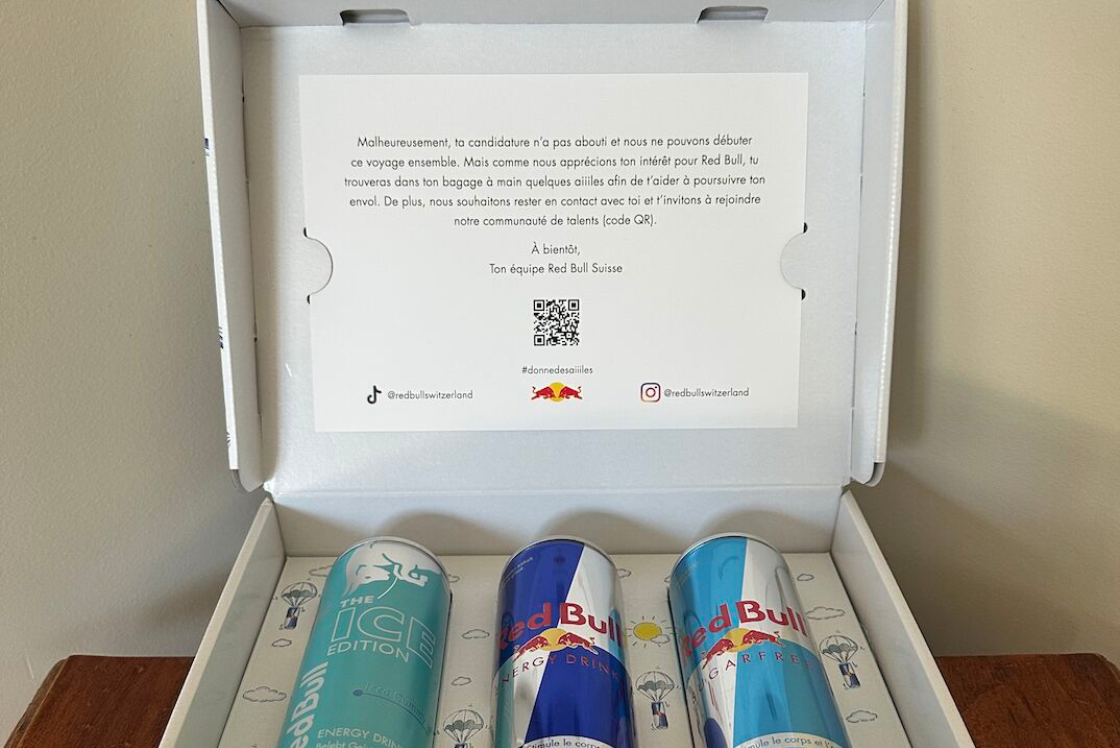
Marketing professional Sofia Ensink Mandracho went viral on LinkedIn last year after sharing her experience with a rejection letter from Red Bull Switzerland.
After applying for a role at the company, she received a package in the mail: a box including three Red Bull cans and a thoughtful rejection letter. “I was so impressed, it felt like I was receiving a PR package instead of a rejection.”
The letter, originally in French, included some words of motivation (with a reference to their well-known brand’s slogan) and a QR code to their talent community:
“Unfortunately, your application was unsuccessful, and we can’t begin this journey together. But because we appreciate your interest in Red Bull, you’ll find some wings in your carry-on to help you continue your flight. We also want to stay in touch and invite you to join our talent community (QR code).
See you soon,
Your Red Bull Switzerland Team”
“In the last few months, I’ve applied to over 350 jobs,” Mandracho wrote. “It’s no secret that the job market is incredibly tough right now. I’ve seen friends go through four, five, even six interview rounds, only to never hear back. I’ve had interviews myself where I’ve had to call the company to ask if I made it to the next round… and silence in return. It’s disheartening and demotivating.”
She reflects: “In an industry (and a market) where silence has become the default, kindness stands out. That small gesture made me feel seen, respected, and ironically, even more motivated to one day work with Red Bull. One of their biggest strengths has always been their marketing: creative, human and full of energy, and this simple act reflected that perfectly.”
Mandracho’s post generated 14,000 likes, providing visibility and positive sentiment for Red Bull as an employer. She was not the only candidate praising the initiative: another applicant wrote a similar post in German, also amassing 14,000 likes.
Usetiful
Content manager Shako Demetrashvili wrote on LinkedIn about the rejection message he got from Usetiful, an Estonian startup whose digital adoption platform enhances software with tours, smart tips, and onboarding flows.
Written by the company’s CEO, Ondrej Dobias, the message included an apology for the delayed response, and a “small token of appreciation”: an unlimited annual license. Dobias invited the candidate to use it for their main job “or any side gigs.”
That’s an interesting strategy for turning rejected candidates into new customers — who may, within a year, become paying customers, or convince their employers to do so.
The candidate shared on LinkedIn: “In my 13 years in the corporate world, I’ve never encountered such a considerate approach, especially in the Georgian job market, where candidates often face silence after applying.”

Crafting your rejection letter: the do’s…
If your company doesn’t have the budget for a rejection extravaganza like Red Bull’s or Usetiful’s, you can still compose a decent rejection letter and handle things properly.
Once the decision is made, you should send the rejection letter as soon as possible. If there’s a delay, you can include a brief apology for the delayed response.
You should tailor the letter to use the candidate’s name. Thank them for their time and interest in the position, and make sure to word it nicely and maintain a professional tone throughout the document. It’s advisable to mention that you’d like to stay in touch for future opportunities.
…and the don’ts
Avoid providing too many details about the reasons for the rejection, as you definitely don’t want the candidate to use any information as grounds for a lawsuit. Similarly, avoid saying the person is not the right “fit” — your decision may come across as purely based on vibes. Instead, you can say that you have chosen someone with more relevant experience or qualifications, which sounds more objective.
Importantly, do not schedule a call or a meeting with the candidate to announce the rejection. This approach is not more considerate; instead, it creates (false) hopes of a favorable outcome, just to increase their disappointment when they get the actual news. Not only that, it gives the candidate room to ask questions you’re not comfortable with. This is not like breaking up with a romantic partner: rejecting a candidate via a message is not only alright but also preferable.
Last but not least, don’t skip sending the rejection letter, especially if the candidate has progressed far in the process and invested a significant time in interviews, tests, and/or assignments. It’s easy to get busy and overlook this step; however, taking care of each part of your candidate pipeline is important in the long run. By doing so, you’ll ensure that you always have a pool of qualified candidates to choose from.
Enjoyed the read? Then subscribe to our newsletter — it’s free!
Subscribe to the TechTalents Insights newsletter to get our best articles and interviews delivered to your inbox every two weeks.



1 Comment
It’s so true that kindness truly stands out in an industry where silence has become the default. The Red Bull example perfectly illustrates how a small gesture can make a candidate feel seen, respected, and even more motivated to work with that company in the future.