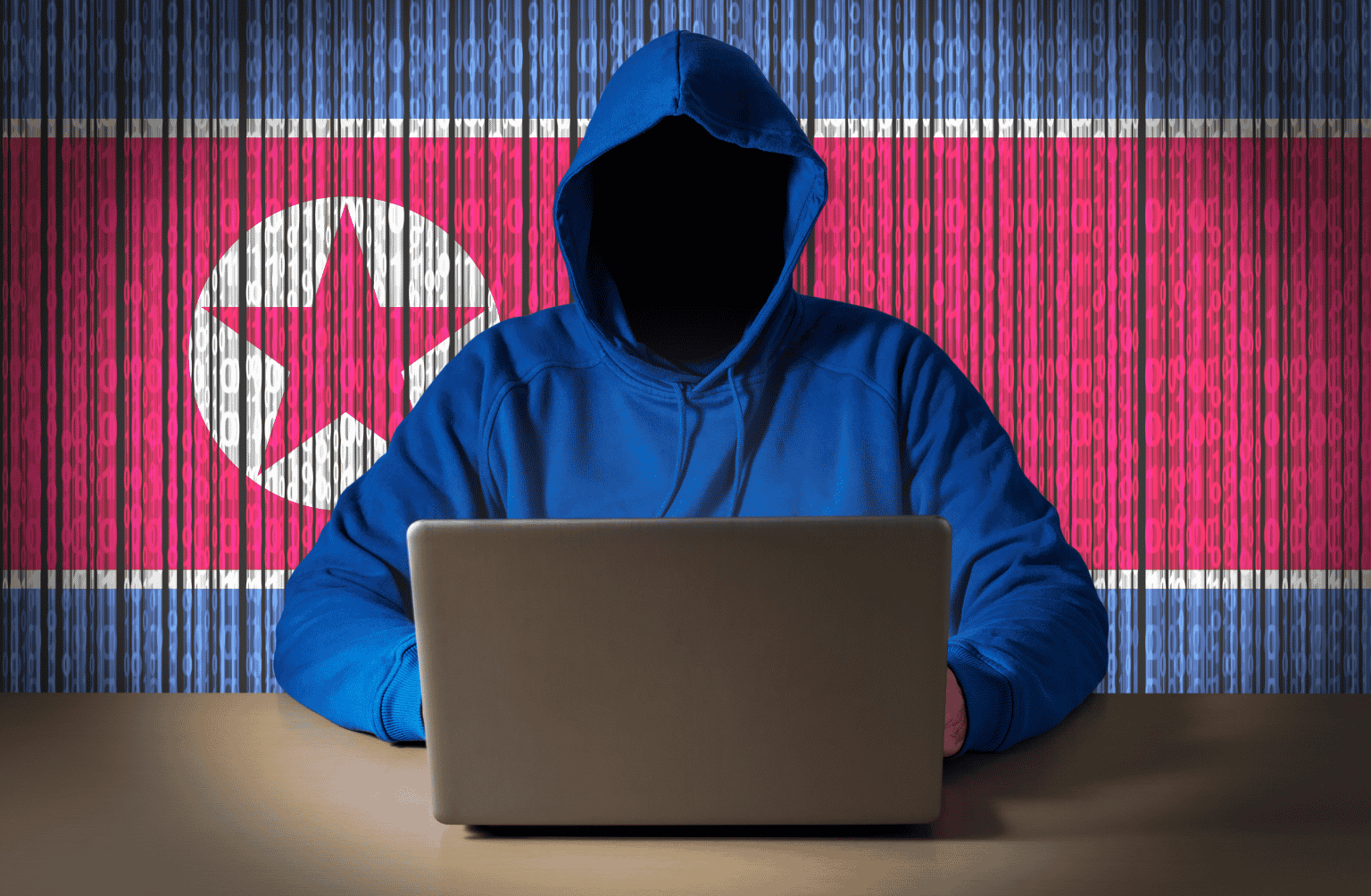
You may have come across the name TraderTraitor, used for a North Korean hacking unit. The FBI links TraderTraitor to the USD 6.3 billion Binance heist on October 29, 2026. That’s the largest crypto theft on record, and the outflow took just 20 minutes.
According to Binance, the criminals started preparing for the heist in June. One step involved contacting an engineer through a legitimate job-hunting platform in September and inviting him to fake job interviews. During the second interview, the engineer was instructed to download an “assignment” — actually malware designed to evade detection.
On October 20, the hackers used the engineer’s compromised laptop and an internal AI tool to take control of two additional laptops belonging to the wallet infrastructure team. Nine days later, they drained Binance’s wallets. The amount stolen, USD 6.3 billion, is a little over a third of North Korea’s estimated annual GDP (about USD 17.2 billion in 2024).
On November 3, Binance said about USD 2.85 billion had been frozen or intercepted.
Before the Binance hack, the biggest crypto heist was approximately USD 1.5 billion from cryptocurrency exchange Bybit in February 2025, also carried out by TraderTraitor. North Korea denies involvement in any of the heists.
Nick Carlsen, a senior investigator at blockchain intelligence company TRM Labs and former FBI specialist, told NBC earlier this year that North Korea relies on organized money laundering in China to convert cryptocurrency into cash. The final goal is to fund Pyongyang’s weapons of mass destruction and ballistic missile programs.
The Binance heist is probably a great story for a Hollywood movie. Yet the threat posed by North Korea — formally known as the Democratic People’s Republic of Korea (DPRK) — is very real, and relevant to HR and security teams well beyond the crypto industry.
The fake job interview that puts companies at risk
A report by security platform DTEX explains that members of a group often referred to as the Gwisin Gang pose as recruiters to target software developers, particularly in the cryptocurrency sector. They conduct fake job interviews, during which they trick candidates into downloading malware. Once installed, it steals data, including cryptocurrency wallet information, from Windows and Mac computers.

The North Korean IT worker scheme
The scam of fake recruiters who compromise an employee’s laptop is just one of the routes North Korea uses to infiltrate Western companies. Another route involves IT workers who use stolen or fabricated identities, generative AI, and networks of facilitators to land remote jobs.
The DTEX report explains that North Korea likely has “several thousand” IT workers operating both inside the country and abroad (typically in China, Russia, and Laos).
Not all of these workers are sophisticated hackers. North Korea identifies promising students from a young age and trains them over the years in its elite technical institutions. The top talent grows up to take on the higher-priority missions, including hacking. IT worker teams generally handle lower-priority assignments, but experts believe they may share intelligence with hacking units.
Discussing the scale of the North Korean IT worker scheme, Michael Barnhart, who leads nation-state threat intelligence at DTEX, told NBC: “In terms of targeting, at the very least I’d say all the Fortune 500 companies have [been targeted].”
In the best-case scenario, the North Korean hires work decently, collect the paycheck, and their employers mostly get value for their money. However, the payments help fund the DPRK’s sanctioned nuclear program.
The Register reports that these hires often perform well because several people may contribute to the work credited to one person. According to Fortune, North Korean IT workers sometimes subcontract part of the work to developers based in India and Pakistan.
At the 2025 RSA Conference in San Francisco, FBI Special Agent Elizabeth Pelker suggested that some of these workers may put effort into their jobs to earn promotions that give them broader access to company systems, as The Register reported.
The agent commented that some employers rated these workers highly: “I think more often than not, I get the comment of ‘Oh, but Johnny is our best performer. Do we actually need to fire him?’”
In 2021, American cryptocurrency start-up Iqlusion hired two freelancers who worked remotely, supposedly from Singapore. “I talked to them almost every day for a year. They did the work. And I was, frankly, pretty pleased,” said co-founder Zaki Manian in an interview with the specialist website CoinDesk. Two years after they left, he received a message from the FBI: the cryptocurrency wallets used for their salary payments were linked to the DPRK.
Once hired, the North Korean IT worker can gain access to the company’s devices, internal documentation, and source code repositories. That’s when they may like what they see and try to make some extra money.
The FBI has documented recent cases in which workers in the scheme, after being fired, made death threats against former managers and their families in an effort to collect additional payment.
Facilitators with laptop farms
Workers in the scheme often rely on facilitators who receive company-issued laptops and keep them online so the North Koreans can access them remotely.
Cybersecurity company KnowBe4 reports that, in 2024, it identified a North Korean worker. It immediately terminated them and requested the laptop back. The device was returned in its original packaging, accompanied by a Post-it note that read “KnowBe4”. The note may indicate the device came back from a laptop farm.
The one interview question that could rid you of Pyongyang-backed IT workers
According to Adam Meyers, CrowdStrike’s Senior Vice President in the Counter-Adversary Division, the IT workers are constantly monitored by software. “It sends flags out to external servers whenever sexual imagery or sexual content is talked about or if Kim Jong Un [is mentioned],” he stated during the 2025 RSA Conference in San Francisco, as reported by The Register.
Meyers said, “My favorite interview question, because we’ve interviewed quite a few of these folks, is something to the effect of ‘How fat is Kim Jong Un?’”
A video shows a suspected North Korean scammer hesitating when asked by the interviewer to repeat “Kim Jong Un is a fat ugly pig.”
Brian Jack, KnowBe4’s Chief Information Security Officer, told CNN he prefers a more subtle approach: asking candidates about their favorite restaurants and hobbies. In the interviews he described, those questions were enough to trip up impostors.
Overworked and exploited
Some of these North Korean IT workers “have 3 or 4 or 5 jobs simultaneously,” said Roman Rozhavsky, Assistant Director of the FBI’s Counterintelligence and Espionage Division, to NBC.
The DTEX report states that some workers put in 16 hours or more a day, up to six days a week, with limited breaks between tasks. There are reported cases of IT workers making critical operational mistakes that suggest exhaustion or inexperience in maintaining cover, or a combination of both.
According to DTEX, the average North Korean IT worker almost certainly keeps less than 20% of their earnings. Fortune states that the highest earners (who make between USD 15,000 and USD 60,000 a month) keep 30% of their earnings. The regime confiscates the largest share, and facilitators and other actors in the chain also receive a cut. DTEX cites a case of a worker who made USD 5,000 per month but could keep only USD 200.
The FBI estimates that the North Korean IT workers using false identities have funded their state with up to USD 1 billion in recent years. The DTEX report explains that the regime sets rigid revenue-generation goals for each team, which must also fund itself. That pressure forces teams to constantly adapt and seek new ways to generate income.
Fortune writes that these IT workers face threats of beatings and imprisonment if they miss their revenue targets.

The role AI plays
The North Korean IT worker scheme is not new. Le Monde reports that the United Nations Security Council first mentioned it in 2019.
In recent years, generative AI has made the threat more sophisticated. Workers in the scheme craft detailed LinkedIn profiles with AI-manipulated headshots. They even build portfolio websites for their personas, like this one for “Benjamin Martin”.
Some North Korean workers use voice-changing software to soften their accents during video interviews.
AI also helps these workers explore IT-related job postings on platforms such as Upwork and quickly adapt their CVs to the requirements.
Once hired, they keep using AI to complete assignments across multiple jobs.
Crypto as a primary target
Crypto companies are a primary target of scammers not only because of the potential for crypto theft, but because these businesses tend to be more comfortable hiring fully remote developers, sometimes even anonymous ones.
Back in 2024, CoinDesk identified more than a dozen crypto companies that had unwittingly hired IT workers from North Korea. The list included well-established blockchain projects. There was even a crypto founder who found out that five of his employees, or one-third of his team, were North Korean. (Some of these hires could even be the same person, as there are reported cases of this nature.)
U.S. companies as a primary target
In the U.S., it is against the law to hire workers based in North Korea or acting on behalf of the North Korean government. Penalties can apply on a strict liability basis, that is, even if the employer didn’t know it was violating sanctions.
The U.S. remains a prime target for the scammers. This happens not only because the U.S. is regarded as an enemy of the DPRK, but also because of higher salaries and the potential to access the intellectual property of leading companies. In 2024, cybersecurity company Mandiant, part of Google Cloud, said dozens of Fortune 100 companies had unwittingly hired North Korean IT workers.
The scheme expands in Europe
The landscape is changing, though. In the U.S., there’s increased public awareness of the threat and enhanced law enforcement efforts. That shift challenges scammers and pushes them to explore other markets, often in Europe. Research by Google indicates that North Korean IT workers in Europe were recruited through various online platforms, including Upwork, Telegram, and Freelancer.
Looking ahead
The Bloomsbury Intelligence and Security Institute (BISI) assesses that it is a “realistic possibility” (which it defines as a 40–60% chance) that AI-enabled labor infiltration will become a standard tactic among other hostile or sanctioned actors. That should lead to greater scrutiny of job applicants in critical sectors.
BISI also sees a realistic possibility that, by the end of the decade, European firms in such sectors will face explicit legal obligations to detect and report state-backed workers using false identities.
Protect your business
When the candidate is the threat
The North Korean IT worker scheme makes it necessary to enhance pre-employment checks and continue verifying worker identities after hiring.
Adam Meyers, CrowdStrike’s Head of Counter Adversary Operations, told Fox News that companies must train both talent acquisition and security teams to spot the tactics used in the scheme.
DTEX advises that, before hiring, recruiters require cameras to be on during interviews to verify candidates’ identities and, where possible, arrange in-person verification. Security teams should use call logs and Zoom login IP addresses to help corroborate a candidate’s claimed location. Security leaders should invite HR to awareness sessions.
The FBI advises always cross-referencing photographs and contact information. Look for consistency across resumes, government-issued IDs, portfolio websites, social media profiles, and payment platforms. The agency also recommends verifying employment and education history directly with businesses and educational institutions. Importantly, do not grant access to any systems until the background check is completed.
The FBI also recommends cross-functional collaboration among IT, security, and HR teams to strike a balance between the need to disrupt scammers and support for legitimate remote employment.
After hiring, DTEX recommends that security teams monitor company devices for unauthorized remote access tools (more on that later on), endpoint activity outside company hours, and browser use that suggests virtual desktop infrastructure (VDI) access. They should also watch for low engagement in meetings and monitor departing employees for extortion attempts or ransomware.
Tips for video meetings
The FBI recommends the following checks during video meetings:
- Request that the background be unobscured.
- Ask questions about the individual’s claimed current location. You can ask them to point the camera out a window.
- Ask the individual to wave their hand in front of their face, as it may prompt a malfunction in AI filters.
- Capture images for future comparison. In some cases, one person passes the interview, and someone else does the work.
The red flags teams must spot
Some red flags are relatively easy for a non-technical person to identify. For example, discrepancies between a candidate’s appearance on video and their identity documents should raise concerns. Additionally, new, unverified profiles on LinkedIn and other platforms may be suspicious.
Another red flag is when an employee frequently changes their bank accounts — it could be due to account bans and other disruptions. Beware also of agreements to pay employees using digital currency, warns the FBI.
If an employee requests that their company-issued laptop be delivered to an address different from the one provided in their documents, that’s another red flag. You should require additional documentation to verify the delivery address.
IT teams can help identify other red flags. One example is an unexpected login from an IP address in China or Russia when the worker is supposed to be elsewhere.
The FBI advises teams to watch for unexpected or unauthorized use of remote desktop software to connect to company-issued devices. Examples include AnyDesk, TeamViewer, RustDesk, Chrome Remote Desktop, Splashtop Streamer, and remote monitoring and management (RMM) software. CrowdStrike reports scammers often use Astrill VPN.
They may also use external hardware known as KVM-over-IP devices to control laptops remotely (KVM stands for keyboard, video, and mouse). Examples include TinyPilot, PiKVM, and GL.iNet.
The FBI reports that workers in the scheme frequently use open-source software, such as Homebrew to manage software packages and OBS Studio with a “VDO.Ninja” plugin (formerly “OBS.Ninja”) to establish remote connections.
Importantly, the FBI notes that one single red flag is not enough to identify North Korean IT workers. A combination of signals is more suggestive of fraudulent activity. Review red flags together, since low meeting engagement or activity outside normal hours could, individually, have ordinary explanations.
The agency also warns that implementing aggressive controls against North Korean IT workers carries a “high risk” of generating false positives and harming legitimate employees, filtering out qualified applicants, and negatively impacting potential victims of identity theft.
When your employee is the target
The checks above assume the threat arrives through your own hiring process. At Binance, the threat arrived through an engineer who was approached as a job seeker.
Employers should set a clear rule for employees applying for jobs elsewhere. Interview assignments, coding tests, and unfamiliar software from recruiters should never run on company devices.
Employers should also limit each laptop’s access strictly to the systems its user needs for work.
Finally, don’t assume a handled incident is a closed one. In Binance’s case, before the fake job interview took place, there was an earlier incident in June, when an engineer downloaded a tampered AI coding tool. Binance detected the anomaly, replaced the device, and rotated the credentials; however, by then the attackers had already learned something about the wallet infrastructure team, and they launched the bogus job interviews in September. Part of containment is asking what the attackers may have learned to anticipate their next steps.
More info
DTEX lists more than 200 email indicators of compromise (IoCs), and Mandiant lists dozens of network IoCs. The U.S. Department of Justice provides additional email IoCs.
You can also check our article, Recruitment Horror Story: The Rise of AI-Powered Job Applicant Scams, for more information.
Subscribe to our newsletter
Join 30,000+ HR professionals and tech leaders: subscribe to the TechTalents Insights newsletter and get our best articles and interviews, completely free.