

Sofia’s calendar looked perfect. Her results were strong. Her colleagues trusted her completely.
She was the person leaders relied on when work became complex. She stayed calm under pressure, met every deadline, and never complained. From the outside, Sofia was thriving.
Inside, she felt empty.
One evening, sitting in her car after work, she realized she had no energy left, not even to feel stressed. She was simply numb.
Sofia was not failing.
She was experiencing high-functioning burnout.
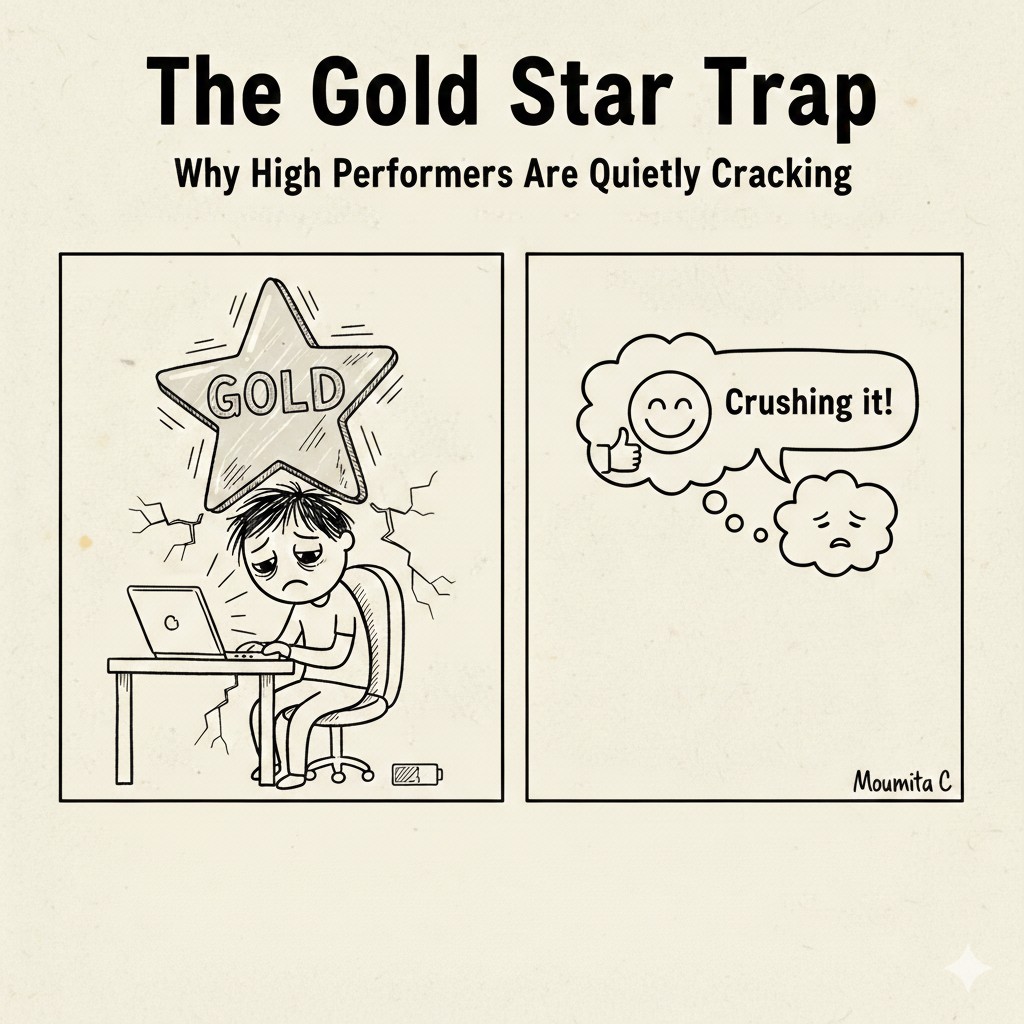
This is one of the most overlooked challenges in today’s workplaces because performance does not immediately decline. In fact, it often remains strong until it suddenly does not.
What Is High-Functioning Burnout?
High-functioning burnout occurs when people continue to perform well while their mental, emotional, and physical reserves slowly run down.
The World Health Organization defines burnout as the result of long-term workplace stress that has not been managed successfully. Most organisations look for clear warning signs such as absenteeism or reduced productivity.
High-functioning burnout looks different:
- Work continues to get done
- Reliability stays high
- Energy, motivation, and creativity fade quietly
- Emotional connection weakens
Burnout researcher Christina Maslach, co-creator of the Maslach Burnout Inventory, has long argued that burnout is not a personal weakness. It is caused by a long-term mismatch between people and the way their work is designed.
High performers are often the best at hiding this mismatch.
The “Reliable One” Leaders Miss
Consider Daniel, a department head known for always delivering.
Daniel says yes to every request. He shields his team from pressure. He solves problems quickly and rarely asks for support. Leaders trust him with the hardest assignments.
Over time, Daniel stops taking real breaks. He checks emails during holidays. He feels responsible for everything. His performance remains strong, but he feels flat and exhausted.
Research from Gallup shows that employees experiencing burnout are far more likely to leave suddenly even when their performance is rated highly.
When Daniel resigns, leaders are shocked.
They say, “We didn’t see it coming.”
Why High Performers Burn Out Quietly
Performance Becomes Identity
Many high performers believe their value comes from results. Rest feels risky. Slowing down feels unsafe.
Philosopher Alain de Botton has written about how modern work cultures tie self-worth to achievement. Over time, people learn to ignore their limits in order to remain valuable.
Stress Builds Up in the Body
Neuroscientist Bruce McEwen introduced the concept of allostatic load: the physical cost of long-term stress.
People may appear to cope well while their bodies absorb the strain. Burnout often begins physically before it becomes visible in behavior.
Emotions Are Suppressed
Senior professionals often push emotions aside to stay decisive. Psychologist Susan David notes that emotions that are ignored do not disappear. They either build up or shut us down.
This is why many burned-out high performers describe feeling numb rather than overwhelmed.

What Leaders Can Do: Practical, Research-Based Solutions
High-functioning burnout cannot be solved with surface-level wellbeing initiatives. It requires changes in how work is designed and how leaders relate to people.
1. Look at Workload, Not Just Output
Research using the Job Demands–Resources model (Bakker & Demerouti) shows burnout occurs when demands increase, but support and recovery do not.
Leaders should regularly review:
- Who is carrying extra, invisible work
- Who is always stepping in during crises
- Who never says no
Consistent reliability often hides overload.
2. Treat Recovery as Part of the Job
Research by Sonnentag and Fritz shows recovery is an active process, not something that happens automatically after work hours.
Leaders can help by:
- Protecting time off
- Avoiding praise for working during leave
- Rotating high-pressure responsibilities
Constant availability is not resilience. It is a warning sign.
3. Talk About Capacity, Not Just Performance
According to Amy Edmondson’s work on psychological safety, people speak up earlier when they feel safe to do so.
Instead of asking only about progress, leaders can ask:
- “What feels heavy right now?”
- “What would make this sustainable?”
Listening without judgment matters more than quick fixes.
4. Redefine What Strength Looks Like
Leadership researcher Brené Brown argues that real strength includes honesty, boundaries, and reflection.
When leaders model rest, say ‘no’ openly, and talk about limits, they change what success looks like for everyone else.
5. Help People Notice Stress Early
In Emotional Agility, Susan David explains that being able to name emotions helps people respond before stress becomes burnout.
Organisations can support this by:
- Training managers to notice early signs of strain
- Encouraging reflection, not just action
- Offering coaching or structured conversations
What High Performers Actually Need
They do not need more responsibility or constant praise.
They need:
- Leaders who notice energy, not just results
- Permission to slow down before breaking
- Systems that support long-term contribution
A Final Word for Leaders
If your most dependable people never ask for help, it does not mean they are fine.
It may mean they believe being needed is safer than being honest.
The most important leadership question today is not:
“Who is struggling?”
It is:
“Who is holding everything together — and at what cost?”
High-functioning burnout is not an individual failure.
It is a leadership signal.
Credits and References
- World Health Organization (2019): Burnout an occupational phenomenon: International Classification of Diseases
- Maslach, C. & Leiter, M.: The Truth About Burnout
- Gallup: Employee Burnout: The Causes and Cures
- McEwen, B. (1998): Stress, Adaptation, and Disease. Allostasis and Allostatic Load
- Bakker, A. & Demerouti, E.: The job demands-resources model of burnout
- Edmondson, A.: The Fearless Organization
- Brown, B.: Dare to Lead
- David, S.: Emotional Agility
Time to subscribe!
You’ve made it to the end. That likely means our content matters to you. Subscribe to the TechTalents Insights newsletter to start getting our best articles and interviews delivered to your inbox every other week.